
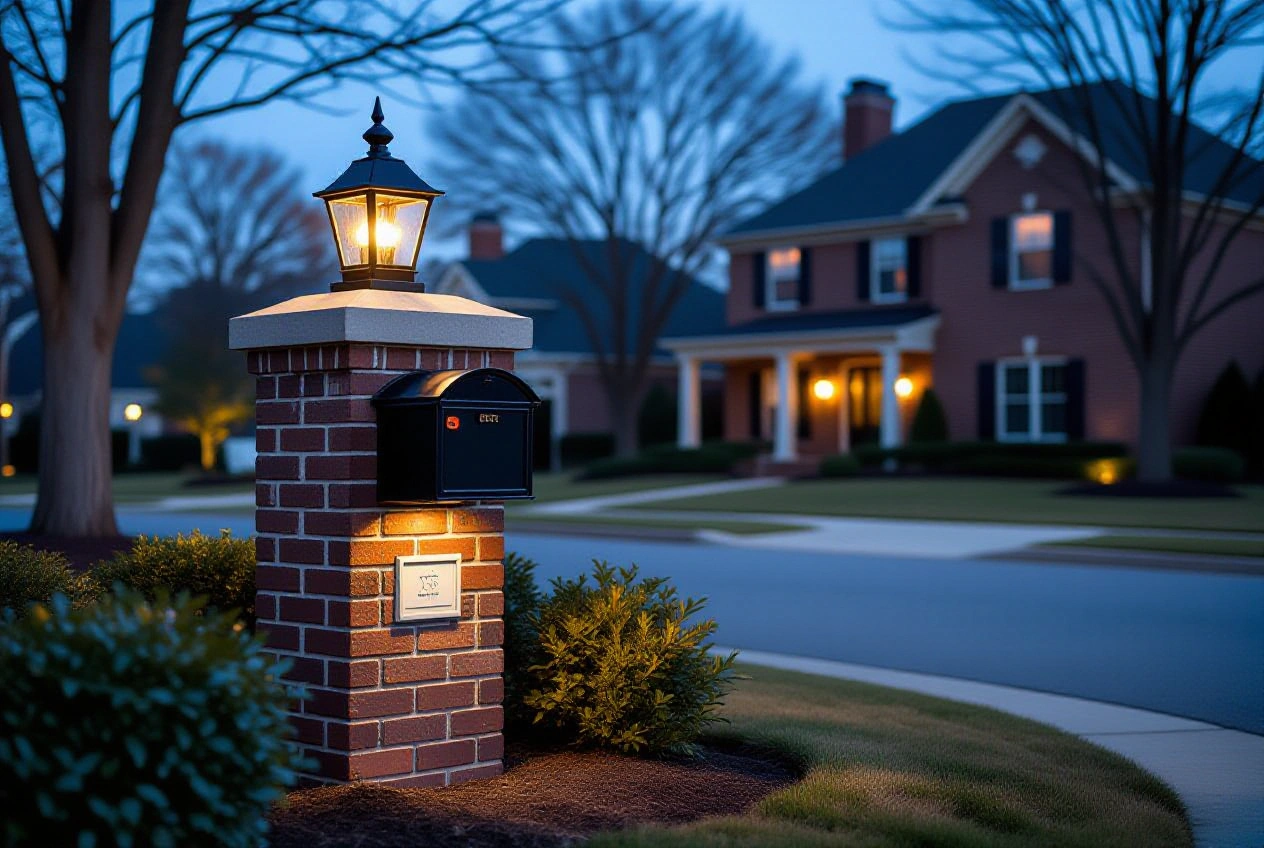
What a masonry mailbox is
It’s a small column, usually brick or stone, with the mailbox built into it instead of bolted to a post. The box sits in an opening near the top, and the column can carry more than mail: a house number plaque on the face, a lantern or a pier cap on top, a tube underneath for the newspaper, a planting bed around the base. Built at the end of the driveway, it’s the first piece of the house a visitor sees.
Brick, stone or both
Most people match the house. Brick laid in the same color and joint as the walls of the home ties the column to it from the street. Stacked limestone or fieldstone suits a stone house or a wooded lot, and a brick column with a stone base or a cast-stone cap mixes the two. If there are already brick pillars at the driveway or a brick walk to the door, the mailbox can be built to look like part of the same set.
Where it goes, and how high
The Postal Service sets the position, not the mason. USPS asks for the bottom of the box, or the point where mail goes in, to sit 41 to 45 inches above the road surface, and for the front of the box to be 6 to 8 inches back from the curb. On a road with no raised curb, the local postmaster decides. We measure from the street before the footing goes in, because once the brick is up the box can’t move.
The box inside
The box itself has to meet the Postmaster General’s standards, and the house number goes on it. For a masonry column that usually means an approved box made to be built in, chosen before the brick goes up so the opening is laid to fit it. USPS also lets the local postmaster approve a mailbox the owner builds, so a custom design can be shown to the post office first.
Is brick safe at the street?
It’s worth thinking about. USPS passes along the Federal Highway Administration’s advice to use supports that give way when hit, such as a 4-by-4 wood post or a 2-inch pipe, and to avoid unyielding ones. A masonry column doesn’t give way. On a quiet neighborhood street behind a curb it’s a common sight; next to a fast road, or where cars swing wide into the driveway, a lighter post may be the better choice. Your HOA may also have its own mailbox design.
Footing, cap and digging
A masonry column is heavy for its size, so it stands on a poured footing below Davidson County’s 12-inch frost line. Utility lines often run along the street, so Tennessee 811 is called at least three working days before we dig. The cap overhangs the brick with a drip edge, which keeps rain out of the top course where a column first starts to come apart.
Rebuilding one that was hit
A mailbox column that took a bumper usually cracks at the footing or leans from the base up. We take it down to sound masonry, save the brick that cleans up, and match the rest. A new box goes in at the right height while it’s open.
What moves the price of a mailbox
The material and the size of the column come first: natural stone takes longer to lay than brick, and a wider column with a planter or a paper tube takes more of either. A lantern wired from the house means a trench across the yard; a solar cap light doesn’t. Tearing out a damaged column, or hunting for a brick to match an older house, adds time.
Sources
- USPS, Mailbox Guidelines — height, curb setback, house numbers and supports
- USPS Domestic Mail Manual 508, section 3.2 — approved boxes and boxes built by the customer
- Metro Nashville ordinance BL2025-898 — 12-inch frost depth in Davidson County
- Tennessee 811, frequently asked questions — notice before digging
- BIA Technical Note 29A, Garden Walls — coping overhang and drip