
Decks for every kind of lot
On a flat lot, a low deck off the back door makes a simple outdoor floor. On a lot that falls away from the house, a raised deck carries the kitchen floor level out over the yard, and the space underneath can become a shaded patio. Multi-level decks step down a slope in stages, with a landing for the grill and another for the table.
Wood or composite decking?
Pressure-treated pine is the most affordable deck board and takes stain in any color. Cedar is lighter, naturally rot-resistant and smells great when it’s new. Composite and PVC boards cost more up front but never need sealing or staining, come in wood-grain colors, and won’t splinter. Under any of them, the frame is pressure-treated lumber.
Railings and stairs
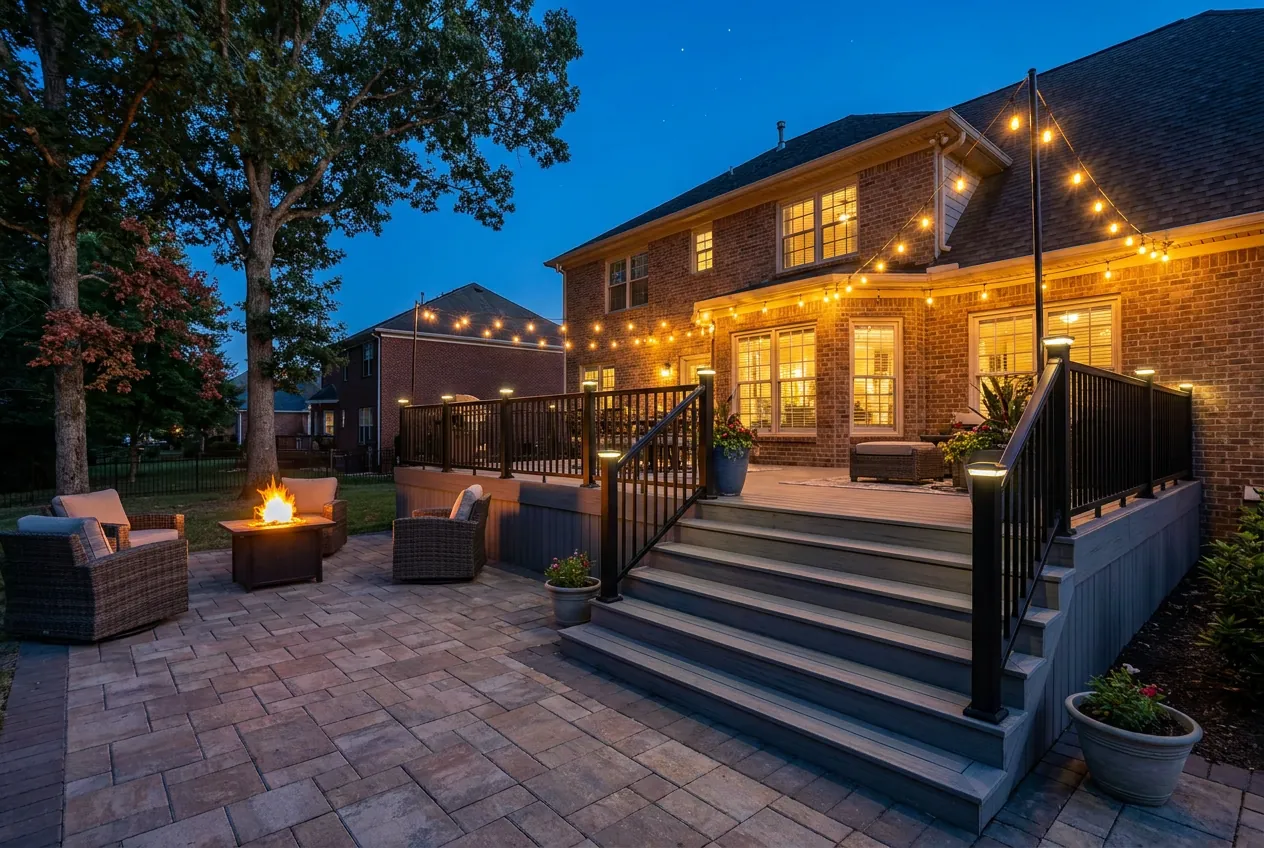
Railings change the whole look of a deck: wood balusters for a traditional house, black aluminum or cable rail for a modern one, horizontal boards to match a fence. Any deck more than 30 inches off the ground needs a guard under the American Wood Council’s DCA 6 guide. Wide stairs with a landing feel more inviting than a narrow flight, and stair lights make them safe at night.
Permits and code
Metro Codes requires a building permit for every new deck in Nashville, and decks are inspected against Metro’s version of the 2024 International Residential Code. Footings go at least 12 inches below grade, and the ledger board is flashed where it meets the house so water can’t get behind it.
Decks and patios together
Because we build both, the deck stairs can land right on a new paver patio instead of a bare concrete pad, and the railings, lighting and fence can all match. Add a pergola over part of the deck for shade.
Sources
- Metro Codes, adding a deck
- Metro Nashville ordinance BL2025-898 — 2024 IRC adoption and frost depth
- American Wood Council, DCA 6 deck construction guide — footings and guards