
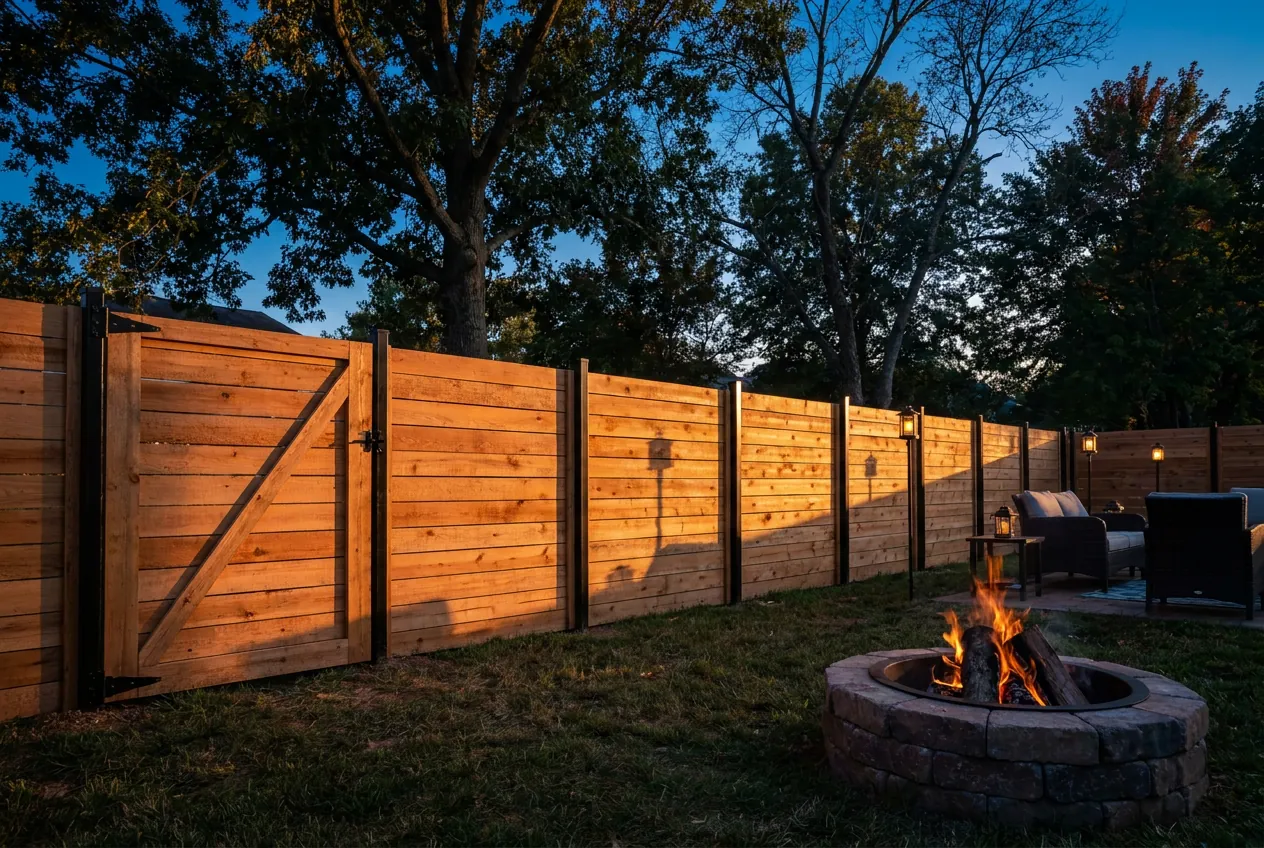
Styles of fence we build
Privacy fences in cedar or pressure-treated pine, with the boards run vertically, horizontally or in a shadowbox pattern that looks good from both sides. Picket fences for front yards. Black aluminum and steel fences that keep the view open while enclosing a yard or a garden. Modern fences that combine black steel posts with horizontal cedar boards.
Wood or metal?
Wood costs less up front and gives you full privacy, and it can be stained to match a deck or pergola. Cedar resists rot and weathers to a soft gray if left alone. Aluminum and steel cost more but never need staining, and an open metal fence is allowed taller near the street than a solid one.
Gates
A walk gate, a double gate wide enough for a mower or a trailer, or a drive gate across the driveway. Gates carry a lot of weight on one side, so gate posts are heavier than line posts and set deeper. Good hinges and a latch that lines up every time make the difference you notice daily.
How tall can a fence be in Nashville?
Under Metro’s zoning code (17.12.040), fences along side and back yards can be up to 8 feet, and up to 6 feet elsewhere in the front setback. Within 10 feet of the street, a solid fence stops at 30 inches and an open one at 72. Metro Codes says no building permit is needed except on lots in a historic overlay, which need a Preservation Permit.
Posts that stay straight
A fence is only as straight as its posts. Set in concrete below Davidson County’s 12-inch frost line, they don’t heave and lean after a wet winter. Every post hole is a dig, so Tennessee 811 marks the utility lines first, with three working days’ notice.
Sources
- Metro Codes, fence permits — height limits under 17.12.040 and the Preservation Permit
- Metro Nashville ordinance BL2025-898 — frost depth
- Tennessee 811, frequently asked questions